RAIL-BENCH: The first perception benchmark suite for the railway domain
The development of scene understanding algorithms requires high-quality, annotated datasets as a fundamental prerequisite. These datasets must capture the full diversity of real-world railway environments - varying lighting conditions, weather, track layouts, and traffic scenarios - in order to train and evaluate models effectively. Furthermore, predefined evaluation protocols and fixed training/test splits are necessary for a standardized comparison of algorithms. To meet these requirements, we have developed RAIL-BENCH, the first perception benchmark suite for the railway domain.
RAIL-BENCH comprises five challenges: rail track detection, object detection, vegetation segmentation, multi-object tracking, and monocular visual odometry. It provides curated datasets drawn from diverse real-world scenarios, along with standardized evaluation metrics and public leaderboards.
- Visit our RAIL-BENCH website here.
- Contact: M.Sc. Annika Bätz
RAIL-BENCH Challenges:
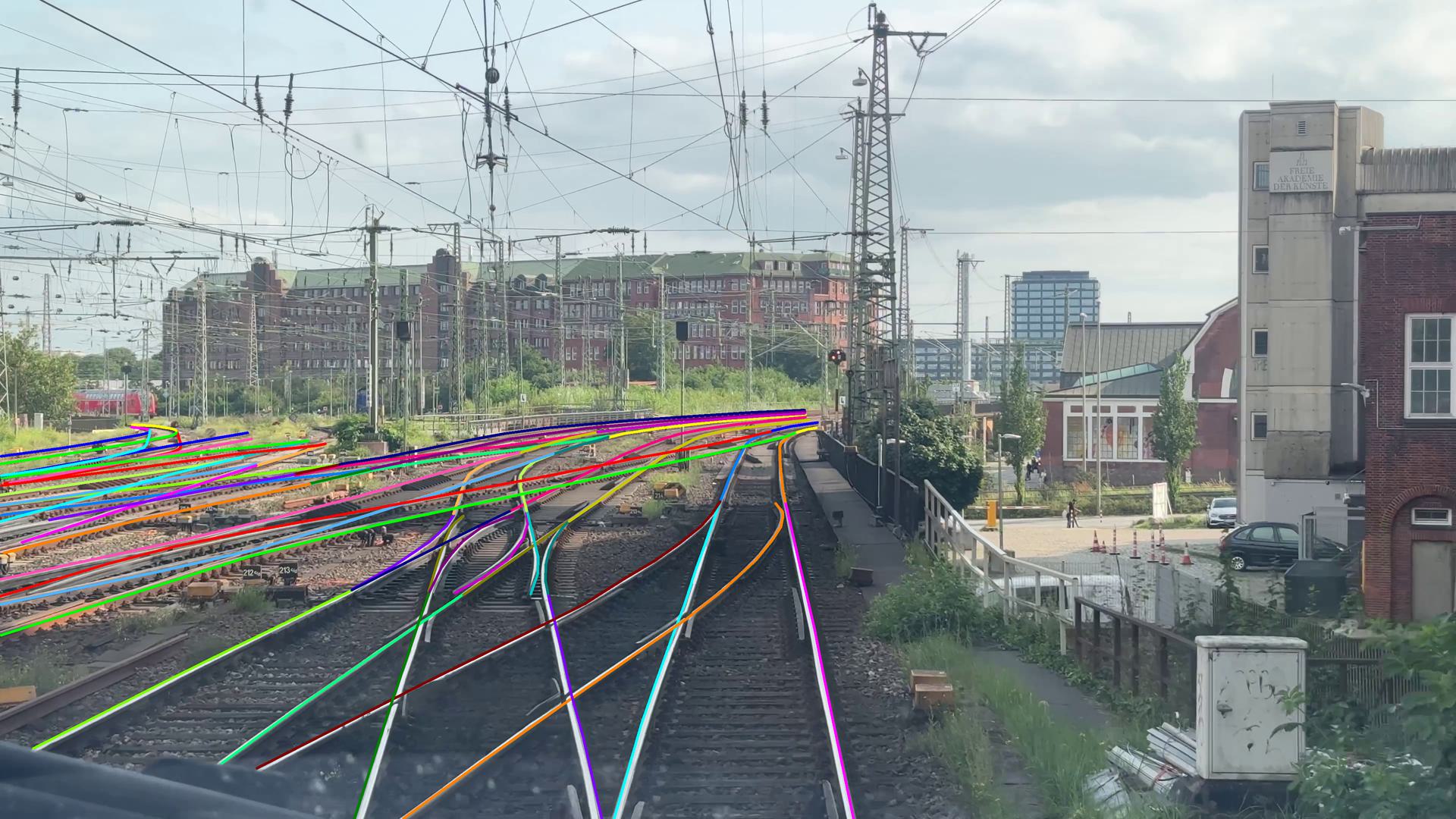 |
RAIL-BENCH RailTask: Detection of all visible rails in the form of polylines. |
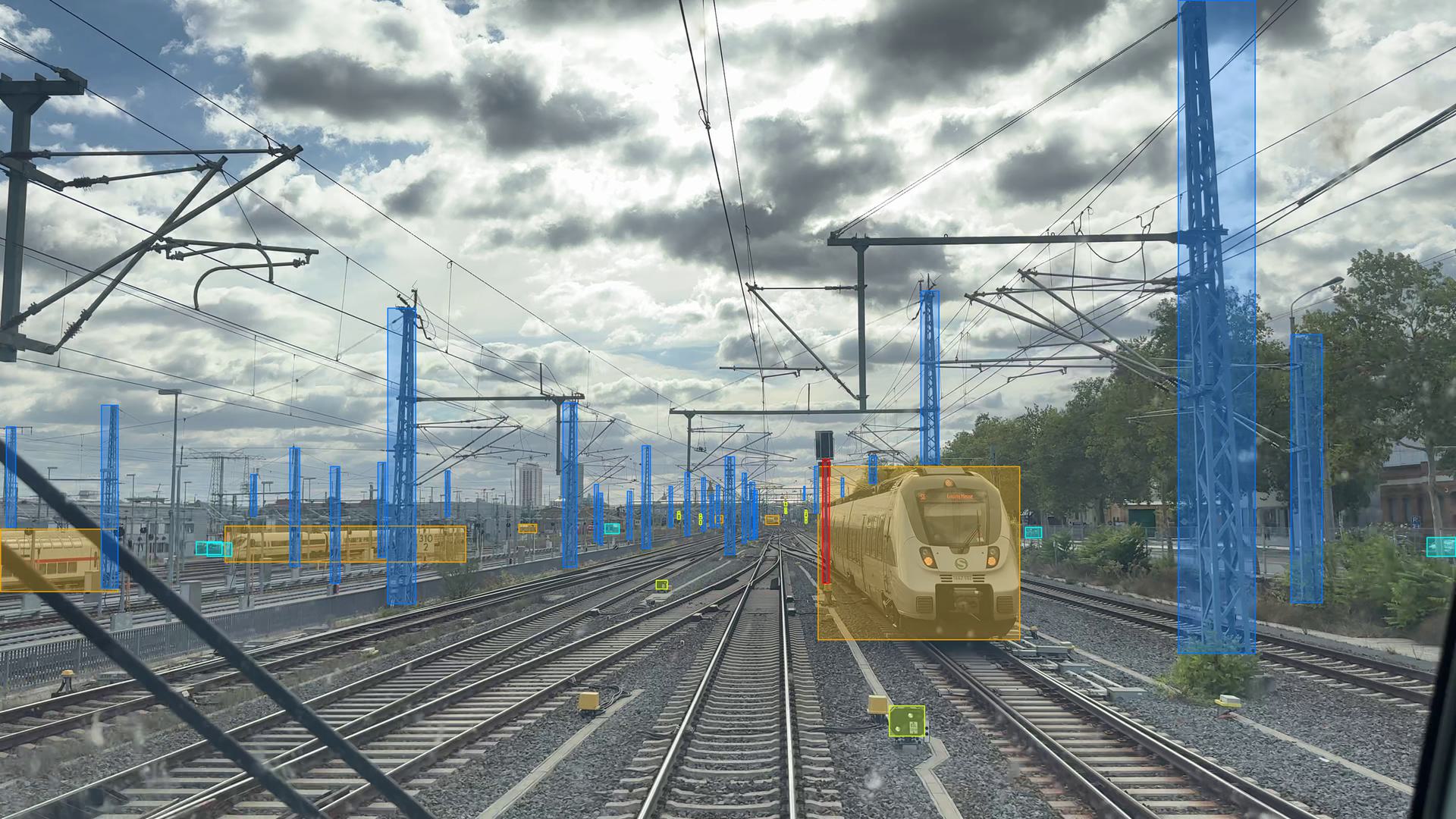 |
RAIL-BENCH ObjectTask: Detection of dynamic objects (trains, persons, road vehicles, bicycles) and infrastructure elements (signals, signal poles, catenary poles), which are marked with bounding boxes. |
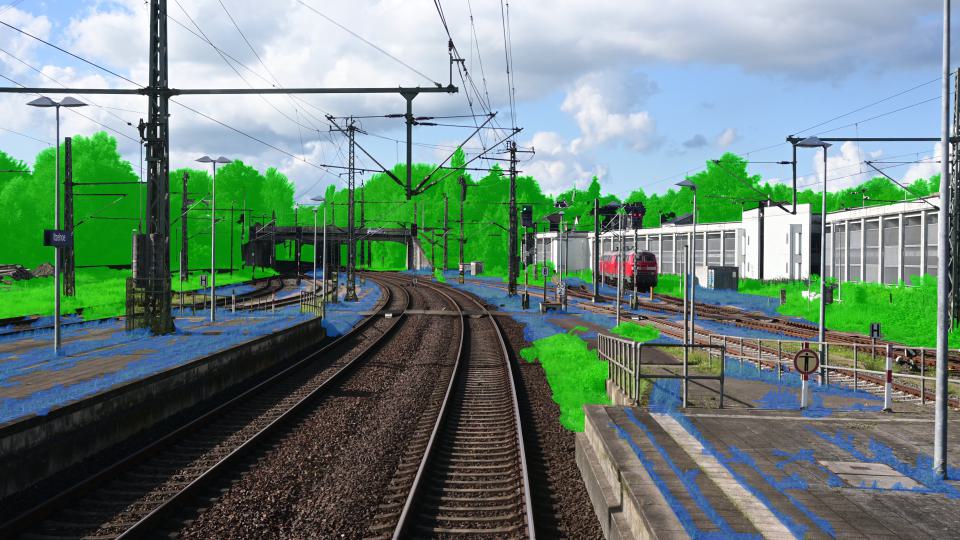 |
RAIL-BENCH VegetationTask: recognition and classification of vegetation into low and high growing type. |
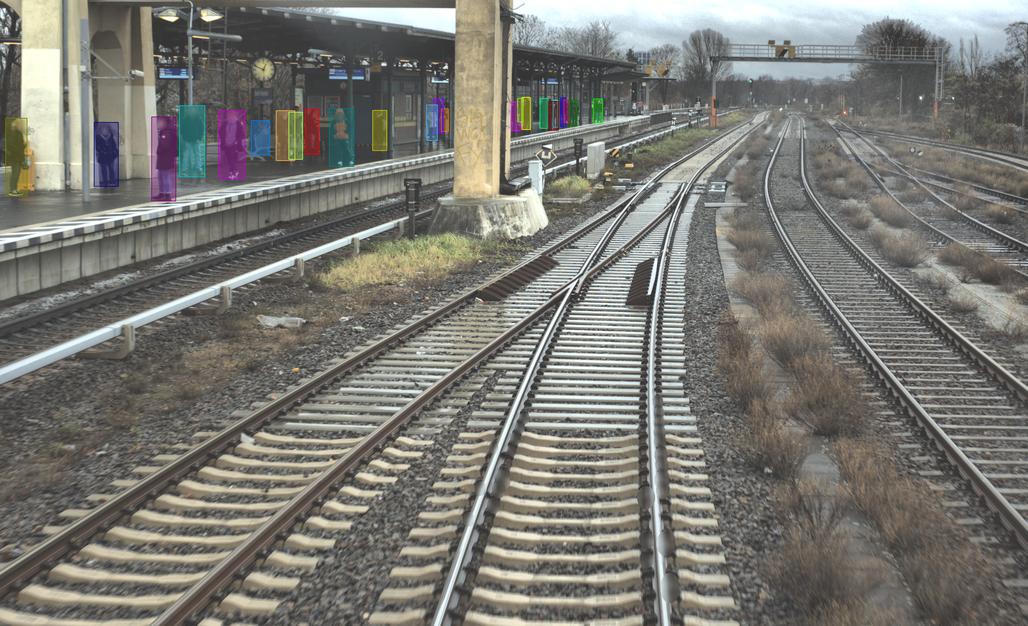 |
RAIL-BENCH TrackingTask: detect and track pedestrians across frames within a short video sequence. |
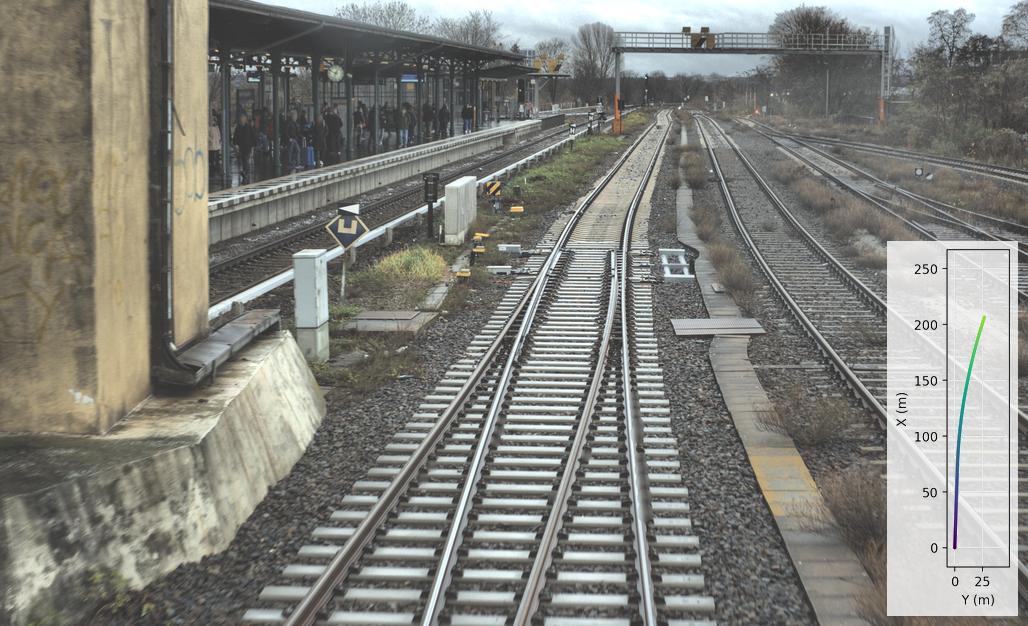 |
RAIL-BENCH OdometryTask: estimation of the ego motion of the camera mounted on the train. |
Our project is funded by the innovation initiative mFUND by the Federal Ministry of Transport

and supported by DB InfraGO, Digitale Schiene Deutschland, and German Centre for Rail Traffic Research.